
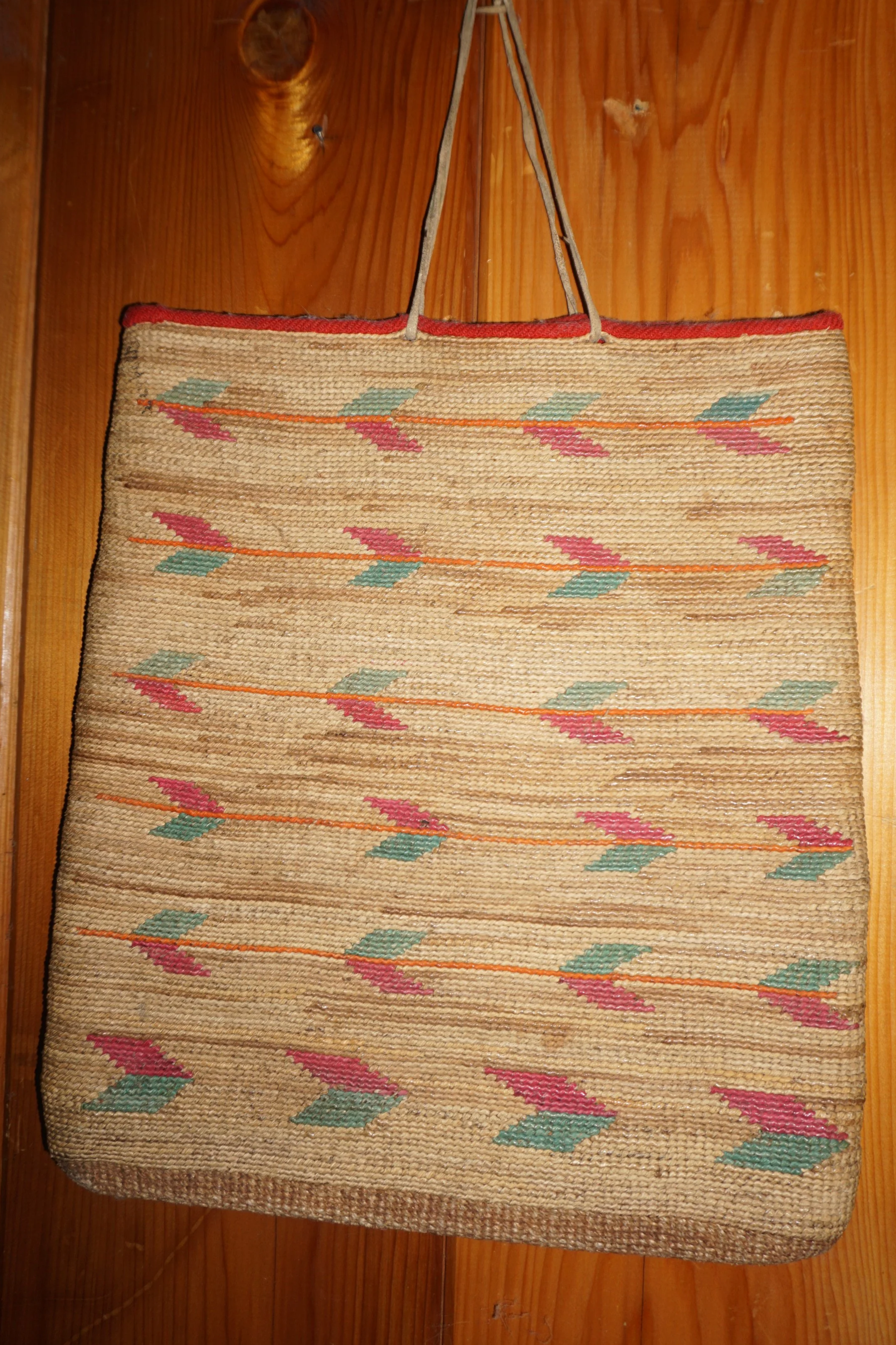
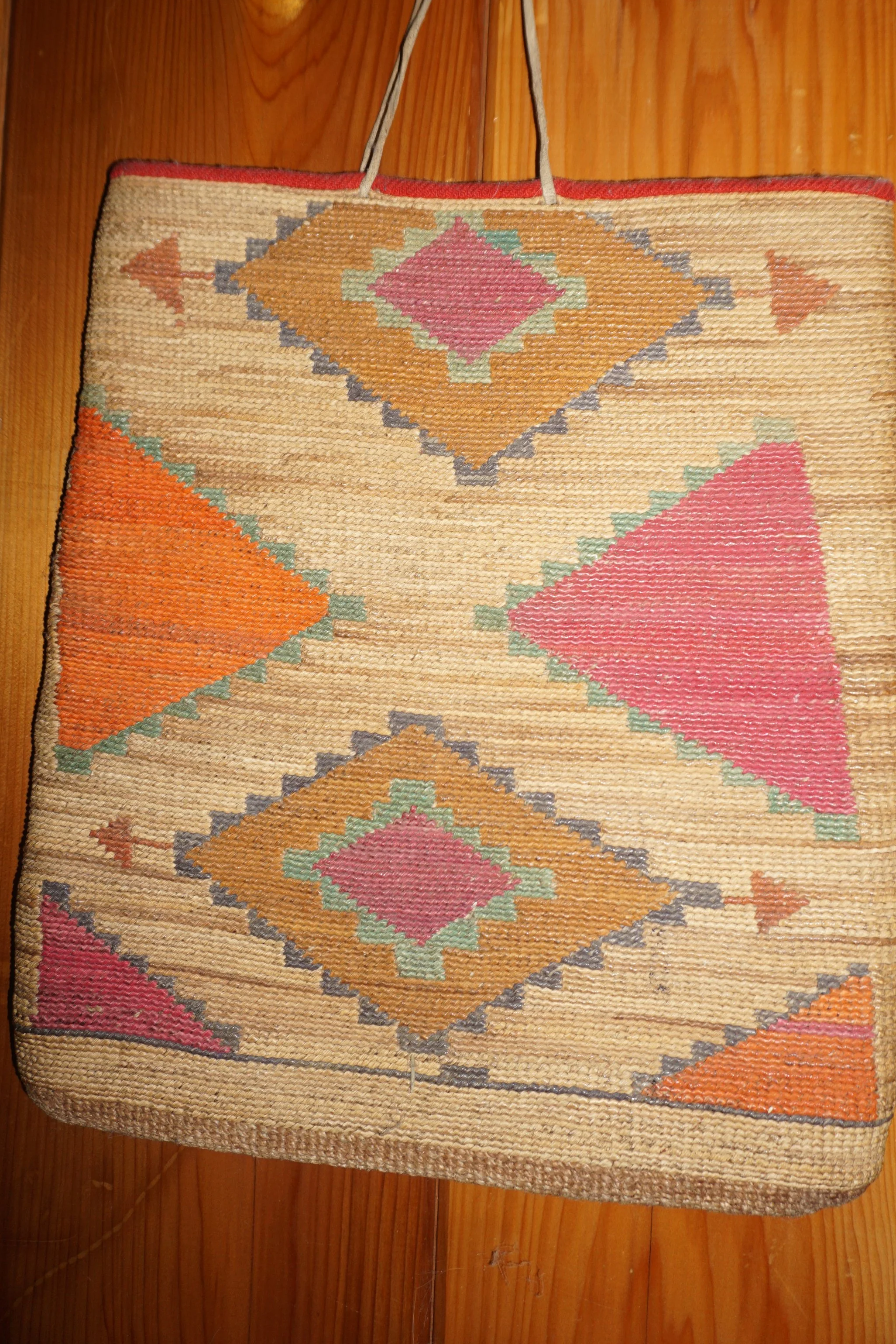
Seasonal moves to river fishing camps, root gathering fields, mountain berry patches, and winter villages present the problem of transporting and storing food and personal belongings. On the Columbia Plateau, soft twined bags were essential for native peoples Because of the labor and skill involved in their construction and design, and the beauty of the finished pieces, these baskets were prized possessions, passed on from tribe to tribe, family to family, and from one generation to the next.
As europeans began to settle in the region, new materials became available. As early as the 1830s, husks of corn were used as decorative overlay, and worsted wool yarn was probably introduced in the 1880s, along with aniline dyes to expand the available range of colors. Smaller purses were added to the repertoire. (Columbia River Basketry by Mary Dodds Schlick)
Columbia River Plateau Museum collection includes this Dogbane cornhusk bag circa 1900, and the book” Native Arts of the Columbia Plateau” edited by Susan Harless